Position Sizing 101: Fixed Fractional, ATR-Based, and Kelly
April 2026
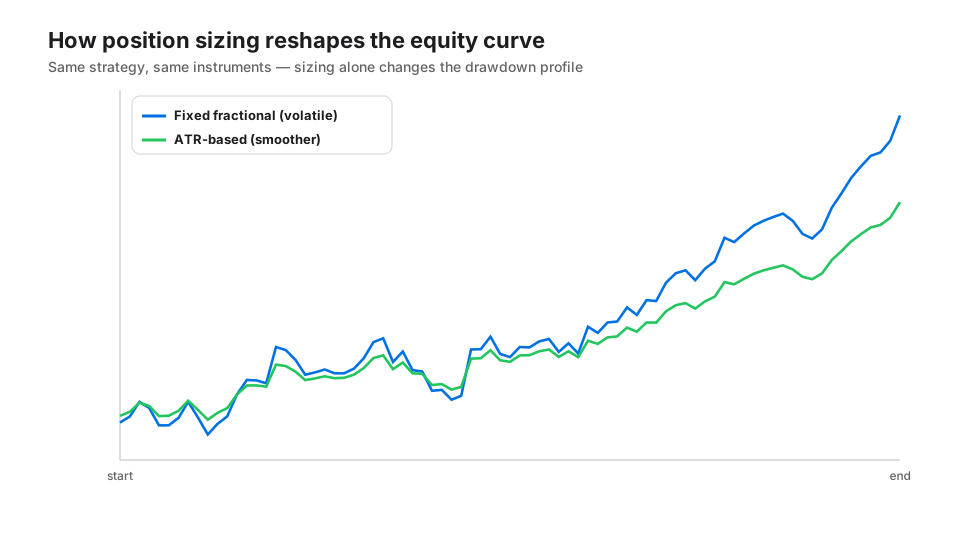
Even with identical logic, how much you put on per trade dramatically changes long-run return and max drawdown. Before chasing win rates or Sharpe ratios, it’s worth mastering position sizing.
Three Classical Methods
| Method | Formula | Character |
|---|---|---|
| Fixed fractional | Size = Capital × fixed % | Simple; DD scales with % |
| ATR-based | Size = Risk $ ÷ (ATR × k) | Volatile names automatically sized smaller |
| Kelly criterion | Size = p − (1−p)/R | Theoretically optimal, practically aggressive |
Fixed Fractional
“Always put 10% of capital in each trade,” or “equal weight across N names.” Intuitive and a good starting point, but it ignores volatility — you end up taking more risk in more volatile names.
ATR-Based
Measure volatility via ATR (Average True Range) and size so that dollar risk per trade is constant. If you allow 1% of capital at risk, high-ATR names get smaller sizes automatically.
Kelly Criterion
Calculates the growth-optimal fraction from win rate and payoff ratio. The catch: it assumes those parameters are known and stable, which they never are. In practice, people run half-Kelly or smaller to dampen estimation error.
Backtest Lenses
- Absolute max drawdown. If fixed fractional gives 50% DD, it’s a sizing signal
- Return / DD ratio. Often improves substantially with better sizing
- Balance during losing streaks. Can you still recover after 10 consecutive losses?
Pitfalls
Full Kelly assumes your estimated win rate and payoff ratio are correct. They never are — so full Kelly produces violent equity swings from estimation error. Conservative sizing often produces better long-run outcomes on the same strategy.
Combining sizing experiments with Monte Carlo simulation gives a statistical read on how sizing changes affect DD.
Try It in QuanTest
In QuanTest you can switch sizing methods on the same strategy and compare outcomes. Moving from fixed fractional to ATR-based alone often reshapes the DD profile significantly.
Free · No signup · Data stays on your device
This article is for educational purposes. It does not guarantee the profitability of any strategy or future performance. Investment decisions are your own responsibility.